There is a kind of founder who has been burned once.
They hired an agency after seeing a compelling pitch, a good-looking portfolio, and some impressive-sounding numbers. They signed a contract. They paid a retainer. Six months later, they had a lot of reports and not many results.
If that is you, this article is for you. If it has not happened yet, read it anyway.
Why agency relationships go wrong
Most bad agency-client relationships do not fail because of fraud or bad faith. They fail because of misalignment — expectations that were never clearly established, goals that were never honestly defined, and communication that was more performance than substance.
The agency says they need six months to see results when the client needed results in two. The client says they want more enquiries when what they actually needed was a better conversion process. The reports show growing reach and engagement while revenue stays flat.
Both sides are disappointed. Both feel let down. And the time and money spent is gone. Most of this is preventable.
What to define before you talk to any agency
Your actual goal
“Grow our business” is not a goal. “Generate 40 qualified leads per month for our interior design services with a target cost per lead below 300 rupees” is a goal. The more specific you are, the better you can evaluate whether an agency can actually help you achieve it.
Your budget, honestly
Always separate the platform ad spend from the agency management fee. These are two different things and should be budgeted separately. A business that allocates 30,000 rupees for “digital marketing” and is surprised when the agency fee takes most of it, leaving very little for actual ads, is setting itself up for frustration.
Your timeline expectations
Digital advertising takes time to optimise. Content marketing takes longer. Be honest with yourself about when you need results, and be upfront about that with any agency you are evaluating.
What to look for in an agency
Real case studies, not just logos
Logos of brands they have “worked with” tell you nothing. Ask for specific examples: what was the goal, what did they do, what were the results, and over what time period? An agency that can answer these questions specifically has earned results. One that deflects to general claims probably has not.
Honesty about what they can and cannot do
An agency that promises guaranteed results, top rankings, or specific revenue numbers without knowing your business is selling you a fantasy. The best agencies tell you what is realistic, what is uncertain, and what depends on factors outside their control. Honest limitation is a sign of confidence, not weakness.
Transparency in reporting
Ask to see a sample client report before signing anything. Does it show platform metrics or does it connect to business outcomes? Does it explain what the numbers mean and what the next steps are, or is it just a data dump? The report tells you everything about how an agency thinks.
A single clear point of contact
Large agencies often onboard you with a senior person and transition you to a junior team member. Know who will actually be managing your account day-to-day before you commit to anything.
Red flags worth walking away from
They guarantee specific results
No agency can guarantee specific ad results because results depend on market conditions, platform algorithms, creative quality, your offer, your prices, and dozens of variables outside their control. A guarantee is either dishonest or hides very conservative commitments.
They lead with vanity metrics
If the pitch focuses on reach, impressions, followers, and engagement without connecting to business outcomes, ask what those mean for actual revenue. If they cannot answer clearly, they are not focused on what matters to your business.
They ask for a long lock-in upfront
A six-month or twelve-month contract before you have seen any results is a risk that should be on their side, not yours. Good agencies are confident enough in their work to earn continued engagement month to month.
They do not ask enough questions
An agency that pitches you confidently without understanding your customers, your competition, your previous marketing efforts, and your specific goals has already decided what they will do before understanding what you need. That is not strategy. That is a template with your name on it.
The quality of an agency’s questions tells you more than the quality of their presentation. If they are not curious about your business before pitching, they will not be curious about it after signing.
Questions to ask any agency before signing
- What specific results have you achieved for businesses in my category?
- Who will be working on my account day-to-day?
- How will you report results, and how often?
- What do you need from me to do your best work?
- What does the first 30 days look like in practice?
- What happens if results are not meeting the agreed benchmarks?
- What is your process for creative approval?
Agency vs freelancer: a realistic comparison
An agency typically offers a team with specialised skills, formal processes, and a range of services under one roof. The trade-off is higher cost and sometimes less personal attention on your account.
A specialist freelancer typically offers deeper expertise in one area, more direct communication, and better value per rupee in their specific domain. The trade-off is bandwidth — a solo professional has limits on how much they can manage simultaneously.
For many small businesses in India, the best starting point is one specialist who is excellent at the specific thing you need most, paid advertising, content, or SEO, rather than a full-service agency that spreads the work across a junior team.
Before you sign anything with an agency
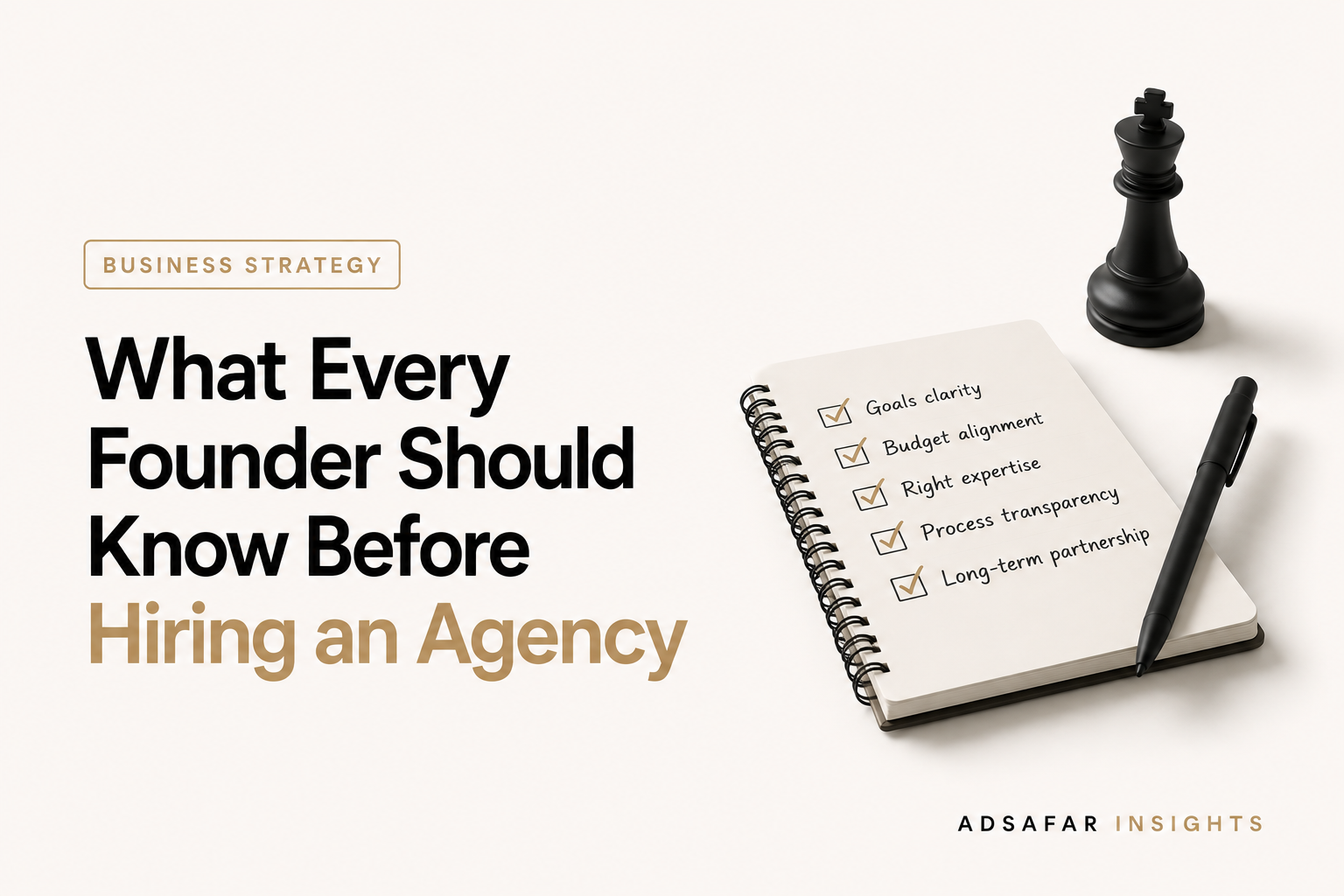
- Define your goal specifically before any agency conversation begins.
- Always separate platform ad spend from agency management fees in your budget.
- Ask for specific case studies with real numbers, not just client logos.
- Walk away from guaranteed results, vanity-metric pitches, and long lock-in contracts.
- The agency’s questions about your business tell you more than their deck.
- For focused needs, a specialist freelancer often outperforms a full-service agency.
Look for agencies with specific, verifiable case studies in your industry. Evaluate their transparency in reporting, their honesty about realistic timelines and results, and who will actually manage your account day-to-day. Avoid agencies that lead with guarantees or vanity metrics.
A strong proposal should include a clear understanding of your business goals, a specific strategy for achieving them, a breakdown of services and deliverables, realistic timelines, transparent pricing, and defined reporting metrics tied to business outcomes rather than platform activity.
Often yes, especially for specific functions like paid advertising or content. A specialist freelancer brings focused expertise at a better price-to-value ratio than a large agency using junior team members. The right choice depends on the breadth of services you need.
Red flags include guaranteed specific results, vague scopes of work, long lock-in contracts before any value has been proven, pitches focused on reach and engagement without business outcomes, and sales processes that do not involve asking enough questions about your specific business.