Think about the last time you tried a new restaurant.
You did not walk in because the food was proven. You walked in because something gave you confidence it would be good. A recommendation from a friend, a line outside the door, a Google rating, the way the place looked from the street.
You trusted before you tasted.
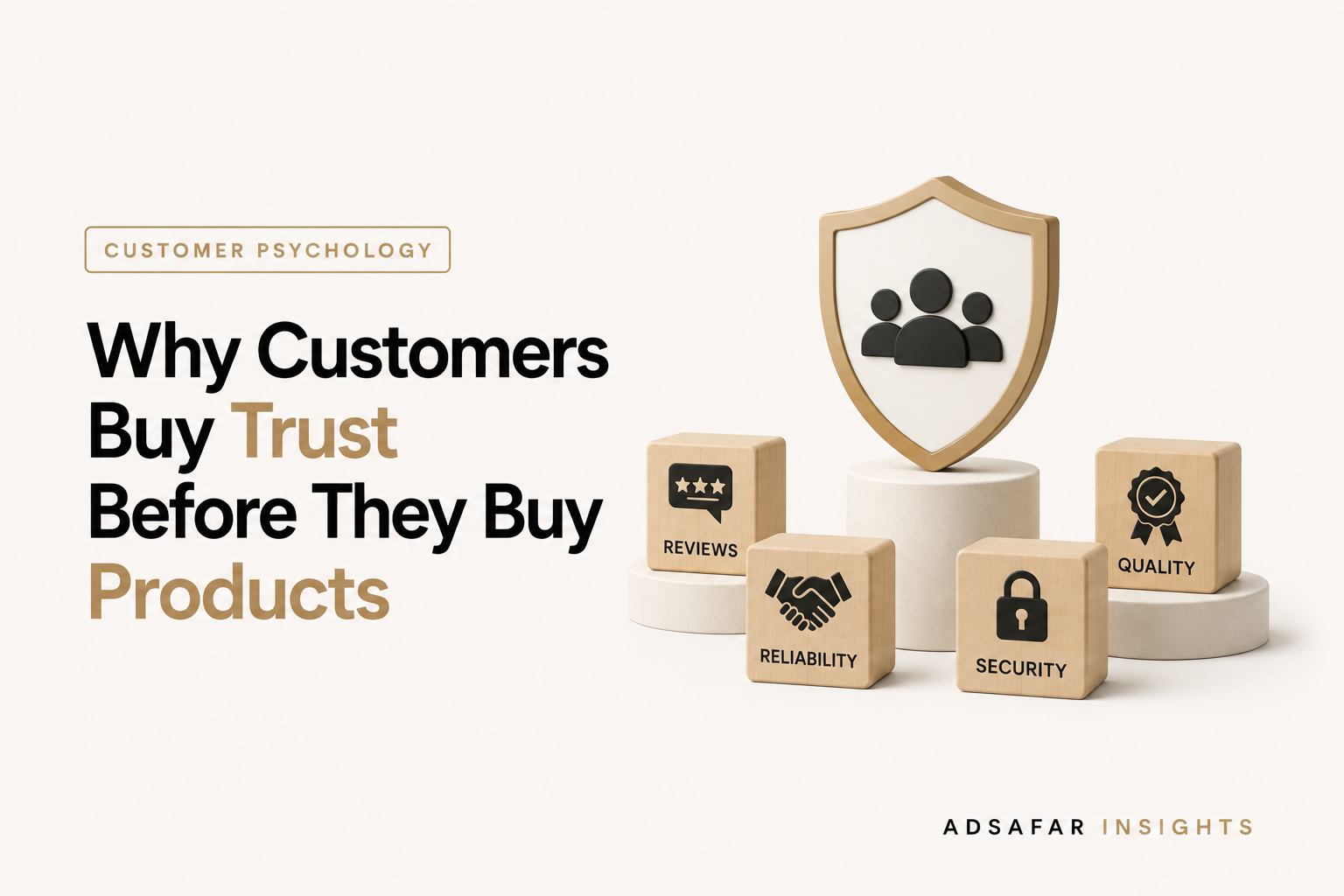
This is how all purchasing decisions work, not just restaurants. People do not buy products or services. They buy their confidence that the product or service will do what it promises. Trust is the transaction that happens before the transaction.
And in a market as competitive as India’s, trust is the only sustainable competitive advantage a business can build.
Why trust matters more now than ever
Trust has always mattered in business. But three things have made it even more important recently.
Customers now have more options than at any point in history. If they do not trust you quickly, there are twenty other options visible on the same screen. Years of misleading ads and overpromised products have also made Indian consumers more careful. “Best in class” and “guaranteed results” have lost most of their persuasive power. And what customers say about you is now visible at scale through reviews, comments, and social media. Businesses that earn trust get amplified. Businesses that break it get exposed.
The four layers of trust in business
Trust is not one thing. It is built in layers, and each layer enables the next.
Credibility — “You seem legitimate”
Before anything else, the customer needs to believe your business is real, established, and capable of delivering. Built through your online presence, reviews, photography, website, and how quickly you respond to messages.
Relevance — “You understand my situation”
The customer needs to feel that you get their specific problem or desire. Built through your messaging, the language you use in your ads, your content, and your conversations. When they read your ad and think “that is exactly my situation,” you have moved to the second layer.
Competence — “You can actually solve my problem”
Now the customer wants evidence that you can deliver. This is where case studies, testimonials, specific results, and examples of your work do their most important job. “We have helped 200 businesses in Gujarat grow through digital advertising” is more trustworthy than “we are experts in digital advertising.”
Integrity — “You will not take advantage of me”
The deepest layer and the hardest to build. Built through honesty in communication, transparency in pricing, how you handle problems and complaints, and whether you do what you say. A business that admits when something went wrong and follows through on fixing it builds more trust than one that claims perfection.
Inconsistency is the fastest way to destroy trust. When your Instagram looks premium and your storefront looks dated, something feels off. Customers cannot name it. But they do not come back.
How to build trust deliberately
Make it easy for customers to verify you
Complete your Google Business Profile. Collect genuine reviews. Keep your website current. Have real photos of your team, your space, and your work. The easier it is to verify your legitimacy, the faster trust is established.
Use specific language instead of claims
“We delivered 42 percent more leads for a coaching centre in Surat over three months” is specific and credible. “We deliver amazing results” is a claim without substance. Specificity is the language of trust.
Share your thinking, not just your selling
Businesses that publish genuinely useful content build trust before the customer ever contacts them. You have already helped them before they have paid you anything. That creates goodwill that advertising alone cannot buy.
Follow through every single time
Trust is built in small moments. The on-time delivery. The proactive update. The report you send before the client has to ask. The call you make when something did not work as expected. None of these are dramatic. But they accumulate into something no competitor can easily copy.
Why customers buy trust before they buy products
- Trust is the transaction that happens before the actual transaction.
- Trust is built in four layers: credibility, relevance, competence, and integrity.
- Inconsistency across touchpoints is the fastest way to erode trust silently.
- Specific evidence of results builds far more trust than general claims of expertise.
- Useful content earns trust before the customer ever contacts you.
- Trust is built in small repeated moments. It compounds over time.
Trust is the decision customers make before they buy. Before choosing your product or service, they are evaluating whether they believe you will deliver what you promise. In a competitive market, trust is often the deciding factor between you and an equally capable competitor.
Build trust online by maintaining a consistent and professional digital presence, collecting and responding to genuine customer reviews, sharing specific evidence of results, using clear and honest language in your communication, and being responsive and reliable in every interaction.
The fastest way to break trust is inconsistency — when your promise and your delivery do not match. Other trust-breakers include misleading pricing, unresponsive communication after a sale, and handling complaints poorly or defensively.
Both matter, but trust comes first. Even the best product will not sell if the customer does not trust the business behind it. And a business that earns deep trust can recover from occasional shortcomings in a way that a distrusted business cannot.