There is a conversation that comes up often with founders who have been in business for five, eight, sometimes ten years.
They built something real. They have customers who love them. Revenue is steady. But somehow, every new marketing effort feels like it is pulling uphill. New customers do not understand what the business does. Referrals are harder to explain. The Instagram page looks cluttered.
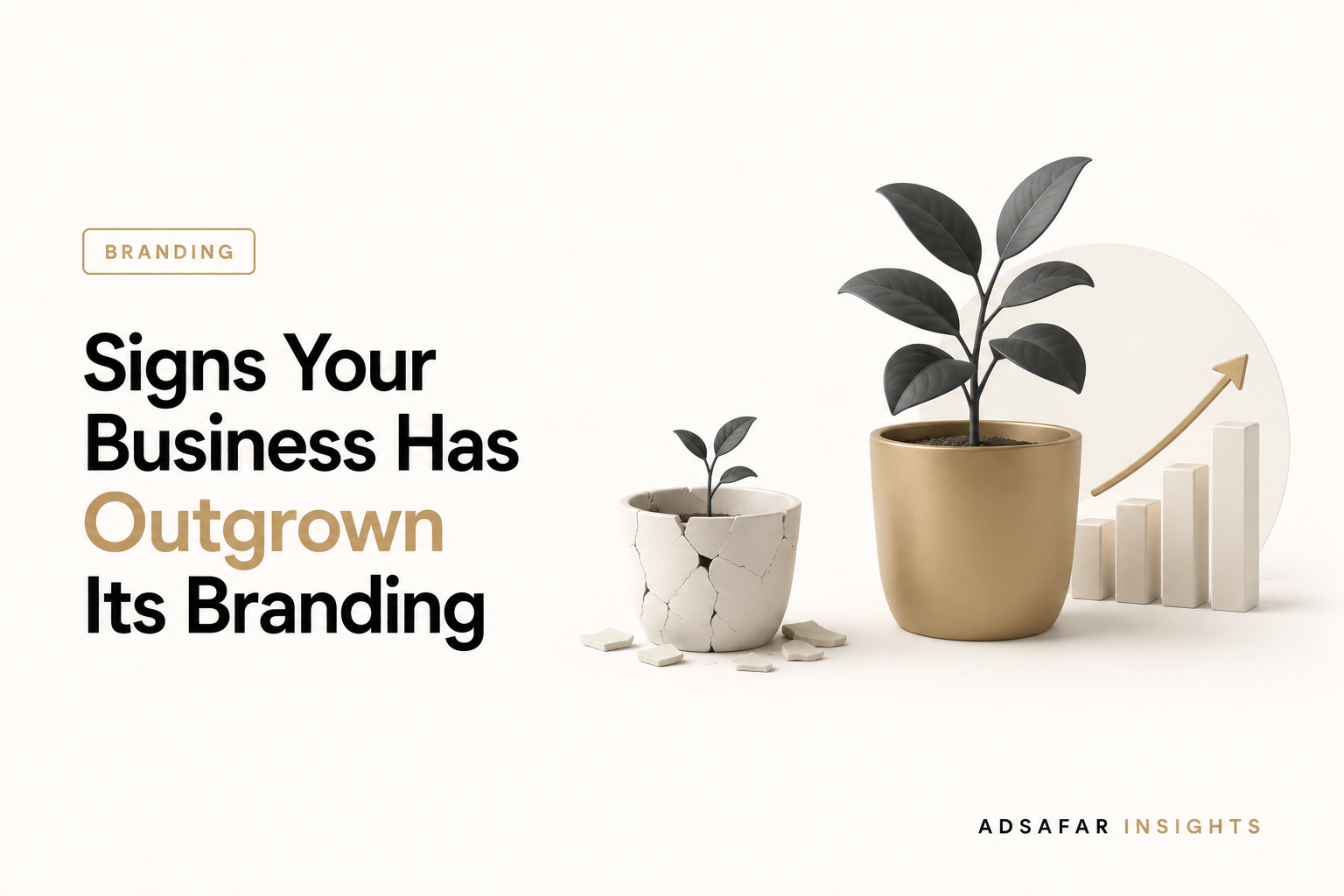
Nine times out of ten, the issue is not the marketing. The issue is that the business has grown but the brand has not grown with it.
The brand that got you here was built for an earlier version of your business. For a smaller audience, a narrower service, a simpler story. That brand did its job. But now it is holding you back.
Here is how to know if this is you.
You are embarrassed to share your own website
A customer asks for your website and you give the link while quietly hoping they do not look too closely. The design looks dated. The copy sounds generic. The photos are from years ago. If you would not show your website to someone you are trying to impress, it is quietly costing you business every week.
Your brand still describes the old version of your business
Businesses evolve. You start with one service, add another, drop one that was not working, pivot to serve a different customer. But your brand often does not keep up. Your tagline still mentions a service you dropped. Your logo still feels like it belongs to five years ago. When your brand and your reality are misaligned, customers sense it even if they cannot name the feeling.
You are attracting the wrong customers
Every business has some customers who are a bad fit. But if it is becoming a pattern — customers who haggle on price, who do not understand your value, who compare you to cheaper competitors — that is usually a brand problem, not a sales problem. Your brand is attracting the people it was designed to attract. If it was built when you were positioned as the affordable option, it will keep bringing you price-sensitive customers even after you have moved upmarket.
Your competitors look more professional than you
When a potential customer compares you to your competitors, what do they see? If your competitors appear more polished, clearer, or more credible, you are losing business to presentation rather than ability. You might be significantly better at the actual work. But the customer does not know that yet. They make their first impression in seconds based on what they see.
Your own team cannot explain what makes you different
Ask your employees or sales team: “Why should a customer choose us?” If you get five different answers, or vague answers about quality and service, your internal brand clarity is weak. Brand is internal before it is external. If your team does not understand and believe your positioning, customers will never experience it consistently.
You are ready to charge more but your brand will not support it
You know you should be charging more but every time you raise prices, customers push back or leave. Part of the reason might be market sensitivity. But part of it is often brand perception. Premium pricing requires a premium-looking, premium-feeling brand. If your digital presence still feels like the business you were three years ago, customers will hold you to that price range.
Outgrowing your brand is not a failure. It is a sign you have grown. The failure is ignoring it.
What to do about it
You do not need a complete overhaul every time. Sometimes a brand refresh, sharper messaging, updated visuals, and a clearer story is enough. Sometimes the situation calls for a more fundamental rethink.
Either way, start with the thinking before the design. Who are you serving now, genuinely today? What do you promise them? What do you want to be known for?
Answer those clearly, and the visual decisions become much easier.
Signs it is time to revisit your brand
- You feel embarrassed sharing your own website or marketing materials
- Your brand reflects a past version of your business, not where you are now
- You keep attracting price-sensitive customers when you have moved upmarket
- Competitors look more professional even if your work is better
- Your team gives five different answers when asked what makes you different
- Your brand is not supporting the prices you know you should be charging
Common signs include feeling embarrassed by your website, attracting the wrong type of customers, looking less professional than competitors, and having a brand that still reflects a past version of your business rather than the current one.
Rebranding costs vary widely. A brand refresh, updating messaging, sharpening visuals, improving digital presence, can be done thoughtfully on a limited budget. A full rebrand with new identity and positioning strategy costs more but is a long-term investment in growth.
Rarely, if done thoughtfully. Customers who love your product or service stay for the value you provide, not the logo. What rebranding changes is who you attract next and how you are perceived by people who do not know you yet.
There is no fixed schedule. Consider rebranding when your audience, services, or market position has shifted significantly, or when your current brand has become a barrier to growth rather than a support for it.